The Pekoe Trail is a 300 km walking route across Sri Lanka’s Central Highlands, split into 22 stages that run from Hanthana near Kandy to the Pedro Tea Estate in Nuwara Eliya. Each stage takes roughly three to six hours and passes through working tea estates, cloud forest, pine plantations and estate villages. A trail pass is required, December to April is the driest window, and a few stages are closed or under alert at any given time. Most visitors walk two to four stages rather than the whole route, often as part of a wider tour of the island.
There is a particular kind of morning in the hill country that stays with you. The mist sits low over the tea, the pluckers are already working their way along the rows, and somewhere below you a train rattles through. You do not need to be an athlete to see it. You just need to walk.
What Exactly Is the Pekoe Trail?
The Pekoe Trail is a waymarked long-distance footpath that links 22 stages across the Central Highlands, stewarded by The Pekoe Trail Company, a non-profit set up to maintain the route and support the communities along it. It opened in 2023 and has collected a fair amount of international attention since, including a place on National Geographic’s Best of the World list for 2024 and a spot among Time’s World’s Greatest Places in 2025.
What makes it different from the usual Sri Lankan itinerary is the pace. Instead of being driven between viewpoints, you walk between them, through estates where tea has been grown for more than a century and past villages that most visitors never see. The Sri Lanka Tourism Alliance describes the route as passing through 21 tea estates, with factory visits possible along the way.
This is also why the route has become the anchor for sri lanka eco trekking. The trail was designed to keep money in the hill country, so your guide, your lunch and your bed for the night are usually local. Walking it well means spending along it.
Which Stages Should You Walk First?
Start with Stage 1 if you are new to hiking in sri lanka, and with Stage 12 if you want the big mountain views. Very few travellers walk all 22 stages. Most pick two to four that match their fitness and the rest of their itinerary.
| Stage | Route | Distance | Time | Grade | Why walk it |
|---|---|---|---|---|---|
| 1 | Hanthana to Galaha | 12.8 km | 4 hrs | Easy | Closest to Kandy, gentle gradients, a good first day |
| 12 | Udaweriya to Haputale | 19.7 km | 6 hrs | Difficult | High ridgelines and the Idalgashinna railway views |
| 13 | Haputale to St Catherine’s | 14.6 km | 4 hrs | Hard | Lipton’s Seat country and long estate descents |
| 14 | St Catherine’s to Makulella | 9.4 km | 3 hrs | Moderate | Short, quiet and easy to fit around a travel day |
| 15 | Makulella to Ella | 9.6 km | 3 hrs | Moderate | Ella Rock views without the crowded standard route |
Stage distances and grades are published by The Pekoe Trail Company and can change when a route is re-cut, so check the official stage pages before you commit.
If you would rather combine the trail with something wilder, the Knuckles Mountain Range sits a short drive north and offers rougher, less cultivated terrain.
When Is the Best Time for Trekking in Sri Lanka’s Tea Country?
December to April is the best window, with July to September a solid second choice. The hill country sits between roughly 1,000 and 2,300 metres, so mornings are cool and clear in the dry months and the tea fields are busy with plucking. Afternoons can still cloud over, which is why most walkers start between 6.00 and 7.30 am.
The north-east monsoon affects the highlands from roughly October to January, and the south-west monsoon brings rain between May and July. Neither closes the route outright, but leeches, slippery clay and poor visibility are all more likely.
Check the trail status before you book anything. As of mid-October 2026, Stage 2 was temporarily closed for hiker safety, with an alternative 2B route being prepared. Stages 3, 4, 7, 9, 12, 18, 19 and 20 were under an amber alert, and the remaining stages carried a yellow advisory because of the north-east monsoon. The Pekoe Trail app and the Trail Watch page carry live updates, and the position changes through the year.
The honest advice from most local guides is simple: pick your stages when you arrive, not six months out. The weather in these hills does not read itineraries.
How to Hike the Pekoe Trail Sustainably
To hike the trail sustainably, buy your pass through official channels, hire a guide from the estate communities you walk through, stay in locally owned accommodation and carry out everything you carry in. The route runs through working plantations and people’s homes, not a wilderness park, so the way you behave matters more here than on an empty mountain.
A few practical habits make a real difference:
- Stay on the waymarked path. Tea bushes are a crop, and a shortcut through a block damages someone’s yield.
- Ask before photographing people. Pluckers are at work. A smile and a question usually gets you a yes.
- Hire local guides. Guiding is one of the clearest income routes the trail created for estate families, particularly for young people and women.
- Buy tea at the factory, not the airport. The margin stays in the valley you just walked through.
- Carry a refillable bottle. Most guesthouses along the route will fill it, and the hill country has very little plastic collection.
- Keep groups small. Four to eight walkers moves quietly and spreads the spend across more small businesses.
Sustainable walking tours in sri lanka tea country work best when they are built around these choices rather than bolted onto a standard coach itinerary. If you want the same ethic applied to the rest of your trip, our Sri Lanka adventure experiences follow the same approach across rafting, cycling and summit hikes.
Passes, Costs and What to Carry
Permits and fees
An official Pekoe Trail Pass is required. You can book it through the official app or portal, and passes are also now sold at the Ceylon Tea Museum in Hanthana, which doubles as the Stage 1 trailhead. Stages that enter Horton Plains National Park need a separate park ticket on top, and foreign visitor rates there are considerably higher than the trail pass itself. A small estate fee also applies in a few places, including Loolkandura, where James Taylor planted Ceylon’s first commercial tea.
Getting around
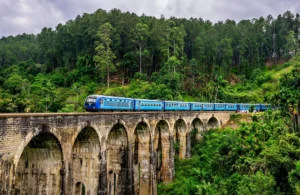
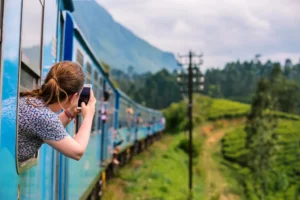
The route is designed around existing transport, which is one of its quiet strengths. Kandy, Nuwara Eliya, Haputale and Ella all sit on or near the trail, and the hill country railway serves Watagoda, Idalgashinna, Haputale and Ella. Tuk-tuks cover the gaps. Most walkers base themselves in one town for two or three nights and take transport to the start of each stage rather than carrying full packs.
What to pack
- Broken-in trail shoes with proper grip, not new boots
- A light rain shell, even in the dry season
- Two litres of water and something salty for the climbs
- Sun protection, because the tea blocks give no shade at all
- A warm layer for Horton Plains and early starts above 1,800 m
- Leech socks between May and January
- The offline map downloaded, since reception drops out in the valleys
Should You Walk It Alone or With a Guide?
Both work, and the right answer depends on how much logistics you want to handle. The stages are waymarked and the app gives turn-by-turn navigation, so confident walkers manage self-guided days without much trouble. Where people come unstuck is everything around the walking: getting to a trailhead at dawn, finding a bed at the far end, reading a closure notice correctly, or dealing with a stage that turns out to be harder than the grade suggested.
A guide also changes what you actually see. The difference between walking past a tea factory and being walked through one, or between a village and someone’s grandmother’s kitchen, is usually a person who knows the valley.
At Bee Nature Travels we build sri lanka walking tours around the stages that suit you, with transport, estate accommodation and local guides arranged, and the rest of the island stitched in around it. Tell us your dates, your fitness and how hard you want to push, and we will put together a tailor-made itinerary that fits. Naturally Sri Lanka, authentically yours.
Frequently Asked Questions
How long does it take to walk the whole Pekoe Trail?
Walking all 22 stages takes about three weeks, allowing for rest days and travel between trailheads. Each stage runs roughly 9 to 20 km and takes three to six hours at a steady pace. Most visitors walk a section of three to five days instead, which fits comfortably inside a two-week island itinerary.
Is the Pekoe Trail suitable for beginners?
Yes, provided you choose your stages carefully. Several stages are graded easy or moderate, including Stage 1 from Hanthana to Galaha and Stage 14 from St Catherine’s to Makulella. Others are graded hard or difficult, with long climbs and sustained descents. Anyone comfortable walking 10 to 15 km on uneven ground can enjoy the gentler stages.
Do I need a permit for hiking in sri lanka hill country?
You need a Pekoe Trail Pass for the trail itself, plus separate tickets for any national park you enter. Horton Plains National Park charges foreign visitors a significantly higher entry rate than local residents, and a handful of private estates collect a small fee at the exit point. Guides and tour operators can arrange all of these in advance.
Is the Pekoe Trail safe for solo female travellers?
The trail is generally considered safe, and many solo women walk it each season. The route passes through inhabited estate land rather than remote wilderness, so you are rarely far from a village. Mobile reception is patchy in the valleys, so most solo walkers share their route plan, start early and finish before dusk.
What is the difference between the Pekoe Trail and the sri lanka tea trail?
The Pekoe Trail is the official 300 km waymarked route across the Central Highlands, while sri lanka tea trail is a general phrase travellers use for walks through tea-growing areas. Some shorter estate walks around Ella, Hatton and Nuwara Eliya are not part of the official route at all. If you want the waymarked long-distance experience, look for stage numbers in the itinerary.