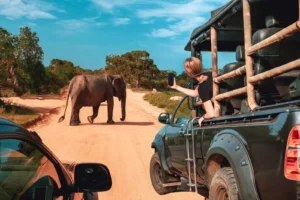
Quick summary: Yala National Park gives you the best chance of seeing a leopard in Sri Lanka, but its main blocks can get crowded with jeeps. Wilpattu, the island’s largest national park, is quieter and more forested, with leopards, sloth bears and elephants gathering around natural lakes called villus. Kumana, just east of Yala, is the top pick for birders, with thousands of waterbirds nesting there from April to July. In short: choose Yala for sighting odds, Wilpattu for solitude and Kumana for birdlife.
Ask ten people about the best wildlife safari in Sri Lanka and most will say Yala. They are not wrong. But there is a quieter side to the island’s wild places that many travellers never see, where you can sit beside a lake with a herd of elephants and not hear another engine for half an hour.
That is what Wilpattu and Kumana offer. In this guide, we compare all three parks honestly so you can pick the one that suits your trip, your interests and your patience.
Yala, Wilpattu and Kumana at a Glance
| Yala | Wilpattu | Kumana | |
|---|---|---|---|
| Location | Deep south, near Tissamaharama | North-west, near Puttalam and Anuradhapura | South-east, near Arugam Bay |
| Size | About 978 km² | About 1,317 km² (largest in Sri Lanka) | About 357 km² |
| Best known for | Leopards | Villus, leopards and sloth bears | Birdlife and nesting colonies |
| Leopard odds | Highest | Good, but needs patience | Possible, less frequent |
| Crowds | Busy, especially Block 1 | Very quiet | Very quiet |
| Best months | November to August | February to October | April to July for birds |
| Feel | Open, fast-paced | Wild, slow and forested | Wetland, peaceful |
Yala National Park: The Famous One
Why is Yala known as the leopard capital of Sri Lanka?
Yala is known for leopards because its Block 1 has one of the highest leopard densities in the world. Permanent water, plenty of prey and rocky outcrops for resting create ideal leopard territory. The cats here are also used to vehicles, so they often stay put when a jeep stops.
The landscape is open scrub, grassland, lagoons and even beach, so spotting animals from a distance is easier than in thick forest. Along with leopards, you will likely see elephants, crocodiles, water buffalo, spotted deer and peacocks on a single drive.
The trade-off: jeeps and seasonal closures
Yala’s popularity is also its weakness. On busy mornings, dozens of jeeps may gather at a single leopard sighting, which can feel more like a traffic jam than a wilderness moment.
Timing matters too. This year, the wildlife authorities closed Blocks 1 and 2 of Yala from 14 September due to dry weather, with reopening expected in mid-October. Closures like this happen most years around the peak of the drought, so always check the dates before you plan around Yala.
Wilpattu National Park: Sri Lanka’s Quiet Wilderness
What makes Wilpattu different from Yala?
Wilpattu is bigger, greener and far less crowded than Yala. Its dense forest opens out onto dozens of villus, which are natural sand-rimmed lakes that fill with rainwater. Animals come to these lakes to drink, so your jeep waits at the water’s edge rather than racing between sightings.
Here is what you might see on a Wilpattu drive:
- Leopards resting on tracks or near the villus
- Sloth bears, especially from May to July when the palu trees fruit
- Elephants, often in small family groups
- Mugger crocodiles, spotted deer and wild buffalo
- Painted storks, eagles and plenty of other birds
Leopards are harder to find here because they spread across a much larger, thicker landscape. But when you do see one, there is a good chance it will be just you and the cat.
Wilpattu is roughly four hours’ drive from Colombo, which makes it easy to pair with Anuradhapura and the Cultural Triangle.
Kumana National Park: A Birder’s Corner Beyond Yala
Kumana shares a boundary with Yala, separated by the Kumbukkan Oya river, yet it feels like a different world. There are no long queues at the gate and very few jeeps inside.
When is the best time for Kumana bird watching tours?
The best time for Kumana bird watching tours is April to July, when thousands of waterbirds nest at the Kumana Villu. This 200-hectare mangrove swamp becomes one of the busiest bird colonies in Sri Lanka, with trees filled with storks, herons, egrets and spoonbills raising their chicks.
More than 255 bird species have been recorded here. Look out for:
- Black-necked stork and lesser adjutant, two rare finds
- Painted storks, pelicans and Eurasian spoonbills
- Glossy ibis, night herons and Asian openbills
- Migrant waders between October and March
Kumana also has elephants, crocodiles and a small leopard population. It sits about an hour from Arugam Bay, so it fits nicely into an east coast trip.
Which Park Is Best? Finding the Best Places to See Leopards in Sri Lanka
If a leopard is your main goal, Yala is still the best choice. A morning drive in Block 1 during the dry season gives you the strongest odds anywhere on the island.
Wilpattu comes second. It has a healthy leopard population, but sightings take more time and luck. Kumana is a bonus: sightings happen, but most people go there for the birds.
“Yala gives you the most leopards. Wilpattu gives you the leopard all to yourself.”
For a leopard safari Sri Lanka travellers remember, many of our guests do both parks: Yala for the odds, then Wilpattu for the quiet.
Sri Lanka Safari for Photographers: Where to Point Your Lens
Each park suits a different style of photography:
- Yala: Leopards on rocks against open skies. Great for action, but other jeeps can creep into your frame.
- Wilpattu: Soft morning light on the villus, and time to wait for the right shot without pressure.
- Kumana: Nesting colonies and birds in flight. Bring a long lens, around 400mm or more.
A few practical tips for any park:
- Book a full-day or early morning safari for the best light
- Carry a bean bag to steady your lens on the jeep
- Keep your camera covered, as the dust gets everywhere
- Ask for a private jeep so you control where and how long you stop
Our Honest Pick: Match the Park to Your Travel Style
Choose Yala if:
- This is your first safari and a leopard is a must
- You are already travelling the south coast
- You are with children who prefer plenty of action
Choose Wilpattu if:
- You have done Yala before or dislike crowds
- You want a slow, immersive wilderness feel
- You are visiting the Cultural Triangle
Choose Kumana if:
- Birds matter more to you than big cats
- You are staying in Arugam Bay or on the east coast
- You want a genuinely remote experience
Plan Your Safari with Bee Nature Travels
At Bee Nature Travels, we believe the best journeys move gently through nature and support the communities around it. Our local team can arrange jeep safaris with experienced trackers, plus birdwatching, rainforest treks and more through our wildlife and nature activities.
Prefer a ready-made route? Browse our Sri Lanka tour packages. Or if you want Yala, Wilpattu and Kumana in one trip, we can build a tailor-made tour around the right seasons for each park.
Frequently Asked Questions
Is Wilpattu better than Yala for a safari?
Wilpattu is better if you value quiet and wilderness, while Yala is better if you want the highest chance of seeing a leopard. Yala vs Wilpattu National Park is really a choice between busy but reliable sightings and peaceful but slower ones. Many travellers with two safari days visit both.
Can you see leopards in Kumana National Park?
Yes, leopards live in Kumana, but sightings are less common than in Yala. Early morning drives give you the best chance. Most visitors come for birds, so treat any leopard as a welcome bonus.
What is the best time of year for a safari in Sri Lanka?
For most parks, February to August is the best period, when dry weather draws animals to waterholes. Yala is usually good from November to August but often closes its main blocks for a few weeks from September. Wilpattu is best from February to October, and Kumana peaks for birds from April to July.
How many days do you need for Yala and Wilpattu?
Plan at least one full day or two half-day drives in each park. Because the two parks sit on opposite sides of the island, allow a travel day in between. A week-long itinerary can comfortably cover both.
Which national park is the best wildlife safari in Sri Lanka for families?
Yala is usually the best choice for families because sightings come quickly and the drives feel action-packed. Children tend to enjoy the variety of animals. Choose a half-day morning drive to avoid the midday heat, and bring snacks, water and sun protection.