“Farm charm” travel means trading a city hotel room for a working farm, a village homestay, or a tea estate bungalow. It is the fastest-growing branch of agritourism in Sri Lanka in 2026, and it looks like this: picking vegetables for your own dinner, learning a cinnamon peeler’s technique, cycling between paddy fields, or falling asleep to frogs instead of traffic. This guide explains what is driving the trend, how it connects to the bigger shift toward regenerative travel, and how you can plan a rural escape around Sri Lanka’s farms, villages, and wild spaces without adding to the strain on them.
What Is “Farm Charm” Tourism, Exactly?
Farm charm tourism is simple at its core: travellers stay on or near working farms and take part in daily rural life instead of watching it from a coach window. It sits inside the wider shift toward regenerative travel, a model that aims to leave a destination better off than before the visit, rather than just doing less harm.
A recent industry trend report found that regeneration has moved past being a buzzword and is now measured through concrete markers like biodiversity, soil health, and the resilience of local culture. Hospitality analysts covering the shift have also pointed out that farm-based stays let guests enter the “nature therapy” space through something practical: cooking with produce grown metres from the kitchen.
For Sri Lanka, that translates into experiences such as:
- A night in a cinnamon grower’s guesthouse in the south
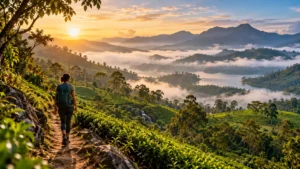
- A morning walk through a working tea estate in the hill country
- A home-cooked curry made from the host family’s own garden
- A rice-paddy cycle route through the cultural triangle’s farming villages
It is a quieter, slower kind of holiday, and that is exactly the point.
Why Agritourism in Sri Lanka Is Having a Moment in 2026
Why Are Travellers Choosing Farms Over Hotels in 2026?
Because farms deliver what a resort pool cannot: a genuine reason to slow down. Agriculture tourism in Sri Lanka works because the island already has the raw material for it, generations of smallholder farming, centuries-old tea estates, and spice gardens that have supplied global markets for hundreds of years. None of that needs to be built for tourists. It just needs to be opened up to them properly.
Three forces are pushing this particular trend forward right now:
- Post-pandemic travel fatigue with crowded sights. Visitors are tired of ticking off landmarks and want something that feels earned, like helping harvest a paddy field at dawn.
- Climate awareness. Travellers increasingly ask where their money goes, and a stay that supports a smallholder farmer answers that question better than a chain hotel can.
- Social media pull toward “real” experiences. A photo of a traveller helping pluck tea leaves or rolling a cinnamon quill performs better than another infinity-pool shot, and it is cheaper for the farm to offer than a new wing of rooms.
For Bee Nature Travels guests, this usually plays out as an add-on to a wider route rather than a stand-alone trip. Pair a day on a working farm with a broader tailor-made tour built around your own pace and interests, and the rural stop becomes the highlight rather than a detour.
How to Practice Regenerative Travel in 2026
Regenerative travel is not a certification you buy, it is a set of choices. Here is how to practice regenerative travel in 2026, broken down into what to actually do and why it matters.
| Do this | Why it matters |
|---|---|
| Book homestays and farm guesthouses over large chain resorts | Money stays with the family running the property instead of leaving the region |
| Ask your tour operator how a visit benefits the farm, not just the traveller | Keeps the experience from becoming a staged photo-stop with no real exchange |
| Travel in small groups rather than large coach parties | Reduces pressure on narrow village roads, water supplies, and farm land |
| Buy produce, spices, and crafts directly from the grower or maker | Puts income straight into the hands of the people who made it |
| Extend your stay in one region instead of rushing between many | Cuts transport emissions and lets you actually get to know a place |
A good starting point is to browse Bee Nature Travels’ own list of farm-based and nature activities and pick two or three that fit naturally into a wider route, rather than treating a farm visit as a box-ticking stop.
Low-Impact Nature Travel Ideas for Your Rural Escape
You do not need a wildlife safari to have a nature-first trip. Some of the best low impact nature travel ideas are the simplest ones:
- Cycle between villages instead of driving. Sri Lanka’s flatter farming regions, like parts of the cultural triangle, are well suited to this.
- Walk a farm trail with a local guide who can explain what is actually growing, rather than just passing through.
- Stay two or three nights in one homestay rather than one night in three different hotels.
- Join a half-day on the farm, weeding, harvesting, or feeding animals, as a genuine activity rather than a photo opportunity.
- Choose a tour that bundles rural stops with wildlife-friendly stretches, so the itinerary itself stays light on the land.
These ideas slot easily into a longer route. Bee Nature Travels’ 7 to 10-day eco-itineraries are built around exactly this pacing, enough days in each area to settle in, without the constant packing and unpacking that pushes up both stress and emissions.
Best Slow Travel Destinations for Farm Charm in Sri Lanka
Not every region suits this kind of trip equally well. These stand out as some of the island’s best slow travel destinations for a farm-focused escape:
- The Cultural Triangle’s farming villages (around Sigiriya and Polonnaruwa) – ancient paddy fields still farmed the traditional way, with village lunches often served on a lotus leaf.
- Hill country tea estates (Nuwara Eliya, Haputale) – cool-climate plantations where you can walk the rows with a plucker and taste tea picked that same morning.
- Knuckles foothill villages – smallholder farms backing onto forest reserve, good for travellers who want farm life and a short hike in the same day.
- Southern spice and cinnamon villages (around Galle and Matara) – working cinnamon peeling demonstrations alongside home-cooked meals.
All of these can be woven into a longer route rather than visited in isolation. Bee Nature Travels’ Sri Lanka tour packages already combine several of these regions, so a farm charm stop becomes one part of a bigger, well-paced journey.
FAQs
What is agritourism in Sri Lanka and how do I try it?
Agritourism in Sri Lanka means staying on or visiting a working farm, tea estate, or spice garden as part of your trip. The easiest way to try it is to add a one- or two-night farm stay to a wider itinerary, rather than booking it as a stand-alone holiday, so you get the rural experience alongside beaches, wildlife, or heritage sites.
How is regenerative travel different from sustainable travel?
Regenerative travel aims to leave a place better than you found it, while sustainable travel mainly focuses on reducing harm. In practice, this means choosing trips that actively support local farmers, guides, and ecosystems rather than simply minimising your footprint.
What are the best slow travel destinations in Sri Lanka for a rural escape?
The Cultural Triangle’s farming villages, the hill country tea estates, and the southern spice villages around Galle are the best slow travel destinations for this kind of trip. Each offers a different pace and landscape, so pairing two of them works well on a 7 to 10-day route.
Is agritourism in Sri Lanka suitable for families?
Yes, most farm stays and tea estate walks are suitable for families, including children, as the activities (picking produce, feeding animals, short walks) are low-intensity and hands-on. It is worth checking with your operator about walking distances and sun exposure for very young children.
How many days should I spend on a farm-focused itinerary in Sri Lanka?
Two to three nights in one region is usually enough to get a genuine feel for farm life without rushing. A 7 to 10-day trip comfortably fits one or two rural stops alongside the rest of your Sri Lanka route.