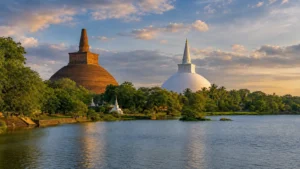
Rajarata, the ancient “land of kings” in Sri Lanka’s north-central plains, is home to Anuradhapura and Polonnaruwa, two of the island’s oldest royal capitals. A Sri Lankan food tour through this region pairs centuries-old Buddhist monasteries and stone monoliths with a cuisine built on millet, rice, jungle vegetables and temple-inspired vegetarian cooking. Travellers who join food tourism in Sri Lanka experiences here can expect quiet dagobas at sunrise, home-cooked rice and curry at midday, and conversations with monks and farmers who still grow the grains their ancestors ate a thousand years ago.
Long before Colombo existed on any map, Rajarata was the beating heart of Sri Lanka. Between the 4th century BC and the 11th century AD, the kingdoms of Anuradhapura and later Polonnaruwa ruled from this dry, flat stretch of the island, and they left behind an extraordinary legacy of dagobas, reservoirs and rock-cut shrines. What is less written about, but just as fascinating, is what people actually ate here, and what they still eat today. That is the heart of any good Sri Lankan food tour through the region: understanding a civilisation through its temples and its table at the same time.
Why Rajarata Matters for Sri Lanka Culinary Experiences
Rajarata’s ancient engineers built some of the most advanced irrigation systems in the pre-industrial world. Enormous man-made reservoirs, known locally as “wewa,” stored monsoon rains and fed paddy fields across the dry zone for over a thousand years. This is the origin point of Sri Lankan rice culture, but it is also where millet, kurakkan (finger millet), and a wide variety of leafy greens and jungle vegetables were cultivated to survive the long dry seasons between monsoons.
Today, that same agricultural backbone shapes the region’s food. Farmers around Anuradhapura and Polonnaruwa still grow kurakkan, and it turns up in everything from roti to porridge to a dense, earthy halapa wrapped in kenda leaves. For visitors interested in culinary heritage tours Sri Lanka has to offer, Rajarata is arguably the most authentic starting point, because the food here has barely changed in centuries.
What Makes This Region’s Cuisine Different?
Unlike the coastal south, where coconut milk and seafood dominate, Rajarata cooking leans on grains, pulses and vegetables. Meals are built around:
- Red or white rice grown in paddies fed by ancient reservoirs
- Kurakkan (finger millet), used in flatbreads, porridge and sweets
- Dhal and mukunuwenna (a leafy green) tempered with mustard seed and curry leaves
- Jackfruit and banana blossom curries during the season
- Buffalo curd and treacle for dessert, a pairing found across the dry zone
Meals are often simpler and less coconut-heavy than in the south, reflecting both the drier climate and the historical influence of Buddhist monastic dietary practices on the wider population.
Monks, Monasteries and a Culture Built Around Food
Buddhism arrived in Sri Lanka in the 3rd century BC, and Anuradhapura became its first great centre on the island. The sacred Sri Maha Bodhi tree, said to be grown from a cutting of the original Bodhi tree in India, still stands there today, and pilgrims travel from across the country to pay their respects.
Monastic life shaped more than architecture. Almsgiving, or “dana,” remains a daily ritual in villages throughout Rajarata, and it is one of the best ways for travellers to understand local food culture up close. Visitors who spend a morning at a village temple often see how rice, vegetable curries and sweets are prepared communally and offered to monks before the community eats together. It is unhurried, generous, and a world away from a restaurant meal.
“Food here has always been an offering before it is a meal,” a monk at a small Anuradhapura temple once told a group of travellers. That sentiment still guides how many households in the region cook, even outside religious occasions.
How Do You Experience Temple Food as a Visitor?
The most respectful and authentic answer is to join a guided visit to a village temple or a home-hosted meal, rather than seeking out a “temple restaurant.” Many Bee Nature Travels itineraries in the region build in time at a local home or monastery kitchen, where guests can watch rice and curry being prepared using clay pots and firewood stoves, a method still preferred by many households for the flavour it gives.
A Taste of Anuradhapura and Polonnaruwa
Both ancient capitals offer distinct experiences for hungry travellers, though they share the same agricultural roots.
| Location | Known For | Food Highlight |
| Anuradhapura | Sri Maha Bodhi, Ruwanwelisaya dagoba | Kurakkan roti, village dana meals |
| Polonnaruwa | Gal Vihara rock carvings, royal ruins | Buffalo curd with treacle, jungle vegetable curries |
| Mihintale | Birthplace of Buddhism in Sri Lanka | Herbal porridge (kola kanda) |
Polonnaruwa, which became the capital after Anuradhapura’s decline, is known for its remarkably preserved Gal Vihara rock carvings and royal palace ruins. Food stalls near the ancient tanks still sell buffalo curd, a dry-zone speciality, served with kithul treacle drizzled generously on top.
Which Dishes Should First-Time Visitors Try?
The dishes most worth seeking out are kurakkan roti with pol sambol, buffalo curd with treacle, and kola kanda (herbal rice porridge), because together they represent the region’s grain culture, its dairy tradition and its long-standing use of medicinal herbs in everyday cooking. These three alone give visitors a fair introduction to how Rajarata eats.
Planning a Food and Heritage Journey Through Rajarata
A well-paced trip through the region usually combines archaeological sites with food experiences rather than treating them separately. A typical two to three day route might include:
- Sunrise at Ruwanwelisaya dagoba in Anuradhapura, followed by breakfast of kurakkan roti and sambol
- A late morning walk through the sacred city, with a stop to learn about the Sri Maha Bodhi tree
- A home-cooked lunch featuring rice, dhal curry and seasonal vegetables in a nearby village
- An afternoon drive to Polonnaruwa to see the Gal Vihara carvings and royal ruins
- Evening buffalo curd and treacle by one of the ancient reservoirs
These experiences work well as part of a broader cultural heritage tour across Sri Lanka, and pair naturally with visits to other cultural heritage sites around the island for travellers who want to see how the ancient kingdoms connect to one another.
According to UNESCO, both the Sacred City of Anuradhapura and the Ancient City of Polonnaruwa are recognised World Heritage Sites, underlining just how significant this region is to Sri Lanka’s history and identity.
Frequently Asked Questions
What is Rajarata known for?
Rajarata is known as the ancient heartland of Sri Lanka, home to the former royal capitals of Anuradhapura and Polonnaruwa. It is celebrated for its dagobas, irrigation reservoirs and a food culture built around rice, kurakkan and temple traditions that date back over a thousand years.
Is Anuradhapura worth visiting for food, not just history?
Yes, Anuradhapura is worth visiting for its food as much as its ruins. Villages around the sacred city still prepare traditional dana meals and kurakkan-based dishes using methods that have barely changed, making it a genuine stop for anyone interested in Sri Lankan culinary experiences.
What food is Sri Lanka’s dry zone known for?
Sri Lanka’s dry zone is known for kurakkan (finger millet), buffalo curd with treacle, and vegetable curries made from jungle greens like mukunuwenna. These dishes developed to suit the region’s drier climate and its reliance on ancient irrigation reservoirs for farming.
Can you visit a temple and try local food on the same day?
Yes, most travellers combine a temple visit with a local meal on the same day, since villages near Anuradhapura and Polonnaruwa are close to the major archaeological sites. A guided food tourism in Sri Lanka itinerary typically builds both into a single day without feeling rushed.
What is the best way to experience authentic Rajarata cuisine?
The best way is through a home-hosted meal or a village temple visit rather than a restaurant, since this is where rice, kurakkan and curry dishes are still cooked the traditional way over a wood fire. Joining a small guided tour makes it easier to access these experiences respectfully.
Final Thoughts
Rajarata is one of the few places in the world where you can watch a sunrise over a 2,000-year-old dagoba and sit down an hour later to a meal cooked the same way it has been for generations. This quiet, grain-growing heartland offers something the coast cannot: a direct, edible link to the island’s ancient past. Bee Nature Travels can help you plan a trip through Rajarata that balances its monuments, its monks and its millet in equal measure.