Slow travel Sri Lanka means visiting fewer places for longer, instead of rushing through a checklist of sights. Travellers are choosing this style because it gives them deeper cultural connection, less stress, and a lighter footprint on the island’s environment and communities. It has become the new definition of luxury, valued more than fast, packed schedules.
For years, a Sri Lanka holiday meant cramming Sigiriya, Kandy, Ella, Galle, and Yala into ten hurried days, bags packed and unpacked every night, a quick photo, then back on the road. It worked, but it left little time to actually feel the country.
Something has shifted. More travellers, especially those planning longer breaks from the UK, Australia, and New Zealand, now choose to stay put a little longer. They pick three or four regions instead of ten, and give each one the time it deserves. This is slow travel Sri Lanka in practice, and it is quietly becoming the more desirable way to see the island.
What Is Slow Travel, and Why Is It Sri Lanka’s Next Big Trend?
Slow travel is not about moving less for the sake of it. It is about choosing depth over distance. Instead of a tour that ticks off ten locations in two weeks, a slow itinerary might cover four regions, with three or four nights in each.
This suits Sri Lanka particularly well. The island is compact, but it holds an enormous range of landscapes and cultures within a short drive of each other. A traveller does not need to cover the whole map to experience its variety. A few well-chosen destinations, given proper time, can tell a much fuller story than a rushed grand tour ever could.
According to the Sri Lanka Tourism Alliance, slow travel is gaining real traction among visitors who want deeper cultural immersion and longer stays, and this fits neatly with Sri Lanka’s mix of heritage sites, wildlife, tea country, and coastline.
Why Fewer Destinations Often Mean a Richer Trip
There is a certain honesty to slowing down. When you are not racing to the next check-in, you notice more. Travellers who slow down tend to report:
- More meaningful conversations with local guides and families
- Better photographs, simply because there is time to wait for the right light
- Lower travel fatigue, especially for families or older travellers
- A clearer sense of place, rather than a blur of similar-looking towns
None of this is dramatic. It is a quiet kind of luxury, built from unhurried mornings rather than five-star extras.
What Does a Responsible Sri Lanka Itinerary Actually Look Like?
It helps to see the difference side by side. Here is how a typical fast-paced trip compares with a slower, more considered one.
| Feature | Fast-Paced Trip | Slow Travel Approach |
|---|---|---|
| Destinations covered | 8 to 10 in 10 days | 4 to 5 in 3 weeks |
| Average stay per location | 1 night | 3 to 4 nights |
| Daily pace | Long drives, early starts | Shorter drives, flexible mornings |
| Local interaction | Minimal, mostly transactional | Regular, often through homestays and community guides |
| Environmental impact | Higher, due to constant transport | Lower, with fewer transfers and more walking or cycling |
| Traveller experience | Efficient but tiring | Relaxed and more memorable |
Is 3 Weeks Enough Time to Slow Travel Around Sri Lanka?
Yes, a well-planned itinerary sri lanka 3 weeks is close to ideal for this style of travel. Three weeks allows time for the cultural triangle, hill country, a wildlife park, and the south coast, without feeling rushed between any of them. Two weeks can also work if you choose three regions instead of four, but three weeks gives the most comfortable pace.
How Sustainable Tours in Sri Lanka Support Local Communities
Slowing down naturally opens the door to more sustainable tours sri lanka, because longer stays tend to favour smaller, family-run properties over large resort chains. Money spent on a home-cooked meal, a local guide, or a village craft workshop stays within the community rather than flowing back to an overseas hotel group.
Responsible Travel notes that this kind of slow, low-impact style removes the barrier that often exists between visitors and everyday life on the island, where travel is not experienced from behind a tour bus window but from within the community itself.
A few things to look for when choosing a sustainable operator:
- Small group sizes or private, tailor-made journeys
- Locally owned accommodation, including eco-lodges and homestays
- Guides trained in conservation and cultural interpretation
- Wildlife experiences that follow ethical viewing distances and vehicle limits
You can browse a full range of Sri Lanka tour packages built around exactly this kind of pace, from tea country stays to coastal weeks.
Responsible Travel in Sri Lanka: Small Choices, Big Impact
Responsible travel Sri Lanka is really a collection of small daily decisions rather than one big gesture. It is choosing a reef-safe sunscreen before a snorkelling trip, or asking permission before photographing someone at a temple.
Some simple habits make a real difference:
- Dressing modestly at religious sites, including covering shoulders and knees
- Buying handicrafts and produce directly from local sellers
- Avoiding single-use plastic where refill stations are available
- Choosing wildlife operators that limit vehicle numbers around animals
These choices cost nothing extra, yet they shape how a destination experiences tourism over time.
How Can Travellers Practise Responsible Tourism in Sri Lanka Day to Day?
The simplest answer is to travel as a guest, not a tourist passing through. That means respecting local customs, spending money with small businesses, and being mindful of water and energy use, especially in drier regions like Yala or the cultural triangle. Responsible tourism Sri Lanka works best when it becomes a habit rather than a checklist, carried through the whole trip rather than applied only at the “important” sites.
A Sample Slow-Travel Route: Three Weeks, Four Places
For travellers planning a longer break, one comfortable structure looks like this:
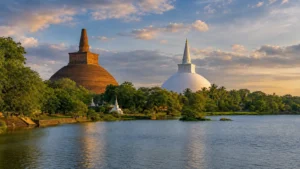
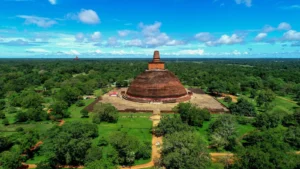
- Days 1 to 5, Cultural Triangle: Sigiriya, Dambulla, and the ancient cities, at a walking pace
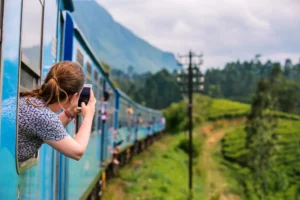
- Days 6 to 10, Hill Country: Ella or Nuwara Eliya, tea estates, and train journeys through the highlands
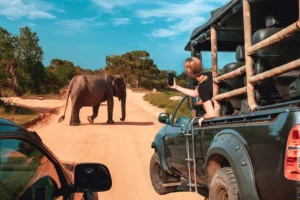
- Days 11 to 15, Wilderness: A national park stay for safaris focused on quality sightings over quantity
- Days 16 to 21, South Coast: Galle Fort and the nearby beaches, with time to simply do very little
You can explore the full range of regions and experiences on our destinations page, or look through specific activities if you would rather build a trip around interests such as birdwatching, surfing, or tea tasting.
Why This Is the New Luxury
Luxury used to mean thread counts and infinity pools. Increasingly, it means something quieter: time. Time to sit at a tea estate without checking the clock, or let a safari morning stretch into afternoon because the light was good and the elephants were close.
Sri Lanka, being compact yet endlessly varied, rewards this approach better than most destinations. It does not ask travellers to cover more ground. It asks them to slow down and pay closer attention to the ground they are already on.
Frequently Asked Questions
Is slow travel more expensive than a standard Sri Lanka tour? Not necessarily. Slow travel often costs about the same or less overall, since longer stays at one property usually come with better nightly rates, and fewer transfers mean lower transport costs. The main difference is how the budget is spent, on experiences and local stays rather than constant movement.
How many destinations should I plan for a 3-week Sri Lanka trip? Four to five destinations work well for a three-week trip. This allows three to four nights in each location, enough time to properly explore without feeling rushed, while still covering a good mix of culture, hill country, wildlife, and coast.
What makes a tour operator genuinely sustainable in Sri Lanka? Look for locally owned accommodation, small group sizes, ethical wildlife viewing practices, and visible community involvement, rather than just marketing language. Reviews and transparent itineraries are usually a good indicator of a genuinely sustainable operator.
Is Sri Lanka a good destination for first-time slow travellers? Yes. Its compact size means you can experience very different landscapes, from ancient cities to tea country to beaches, within short drives of each other, without needing to cover huge distances between stops.
What is the best time of year for a slow travel itinerary in Sri Lanka? It depends on the region, since Sri Lanka has two monsoon seasons that affect opposite coasts at different times. Generally, December to March suits the south and west coasts, while May to September works better for the east coast and cultural triangle.
Ready to plan an unhurried journey of your own? Explore our Sri Lanka tour packages and let us help you build an itinerary built around time, not just distance.